As expats living in India, it is impossible to experience the country from the same perspective as a true native of the country. We see it through a different lens. While we may integrate into the drum beat of life here, we cannot shake the fact we hail from a different place and we have inherent perspectives of life in India that we will not be able to completely escape.
These last few weeks have been predominantly spent with a more touristic bias fulfilling the role of tour guide to visitors at times and getting to see some new places myself too. It is fun to witness the awe of fresh visitors to India, as they experience the ambience of this country for the first time. I am now so used to life here that I feel completely at home with the idiosyncrasies of the country and the manner of living. It is therefore important to remember the culture shock that can occur for newbies, and hence kicks in the ‘fixer’ role that I can now play here.
The last couple of weeks have been a whirlwind – in a good way though! Since the G20 finished I had a few more peaceful office weeks, with a relatively calm diary being a nice lull before the next workflows kick off this coming week. This afforded me the chance to get on top of things and be well rested from the preceding months of travel and busy bus-y-ness. Then these last two weeks it has been nice to have visitors, and to share Delhi life in a normal way, but also to take time to experience some new things too.
It was my birthday during this time, and a fine dinner was had on the rooftop of the Oberoi hotel, with its view out over the lights of Delhi.

This was a surprise location for me, all set up covertly by Jen. Pawan the driver took a completely indirect route to get there for no apparent reason other than he seems to like driving past India Gate as much as he can, which added to my anticipation!

It was a great surprise though as dinner was as at a fabulous Chinese restaurant with drinks on a cool outdoor rooftop bar before and after. Plus they brought out a birthday cake!
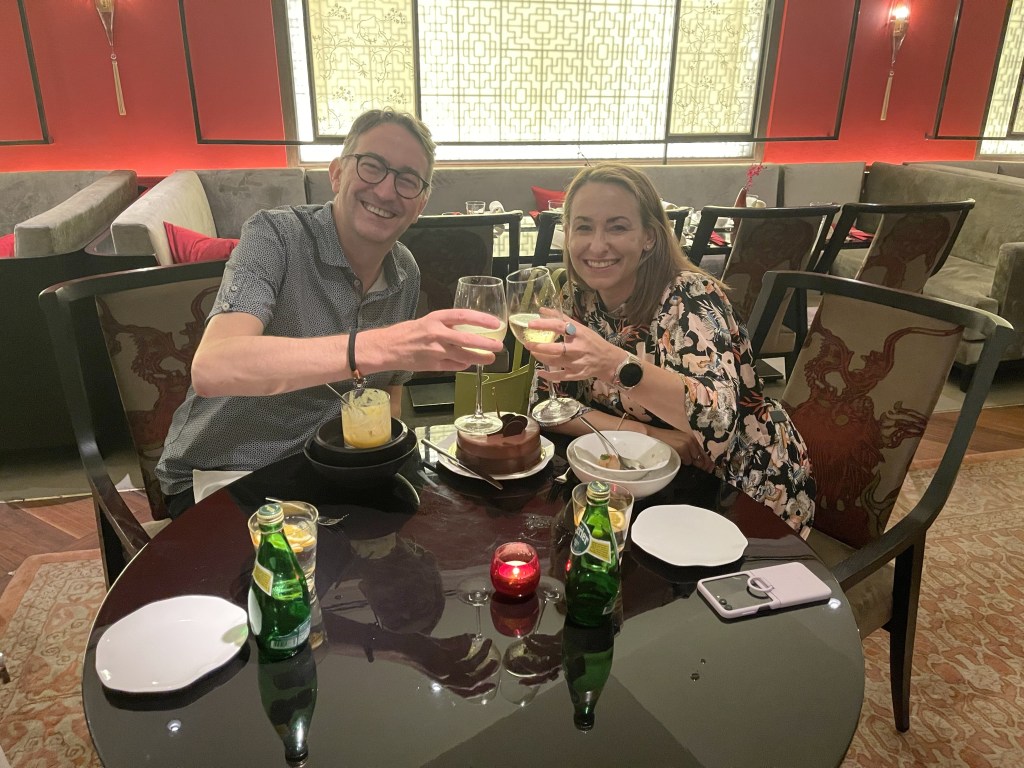
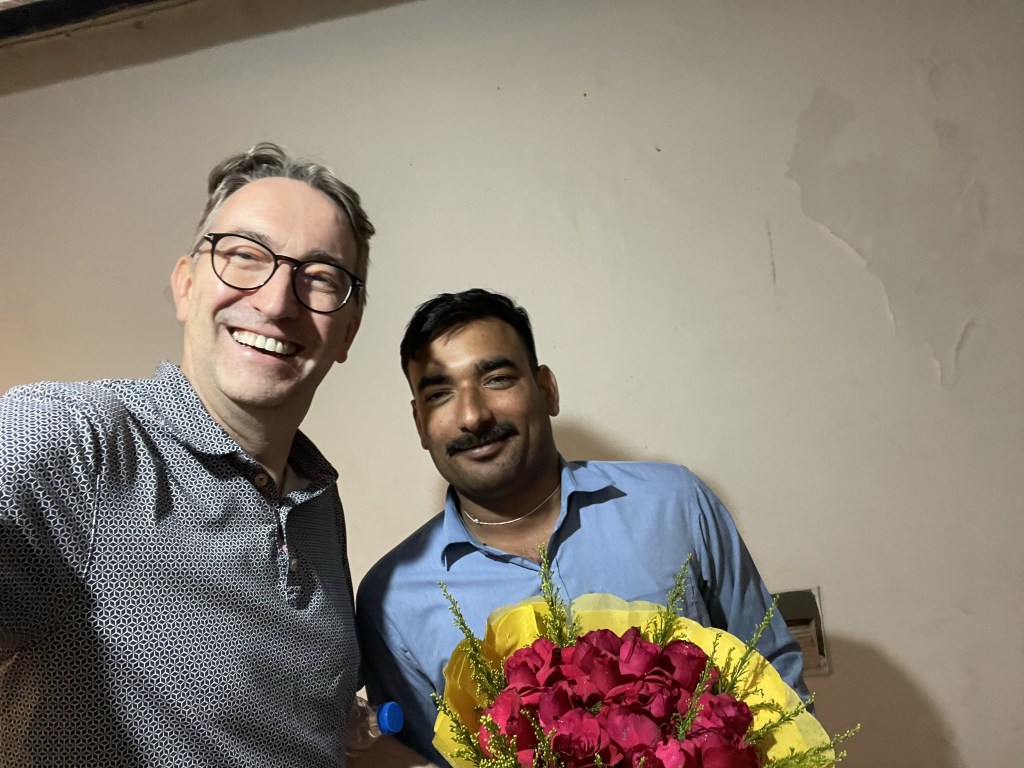
Another year older and wiser. Well older anyway…! My guards also bought me some flowers to celebrate the occasion….

Then last weekend (a long weekend here as Monday was a holiday day to celebrate Gandhis birthday), it was a real tourism roadshow – with Pawan dutifully recruited for the weekend’s wheels – and a steady stream of tourist sites were ticked off.
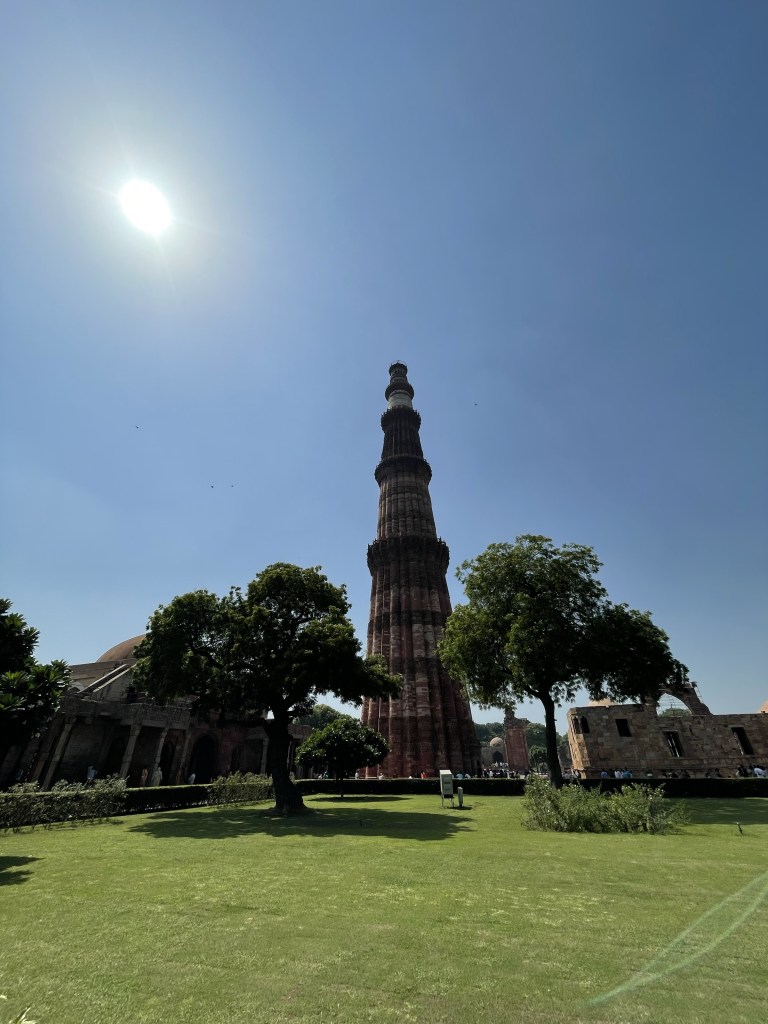
This included the Qutb Minar, the world’s tallest minaret made of bricks, originally built around 800 years ago. I had never visited this site and was keen to do so. It is apparently one of the most visited tourist spots in Delhi and marks the centre of the original city – the true Old Delhi, formerly known as Lal Kot.
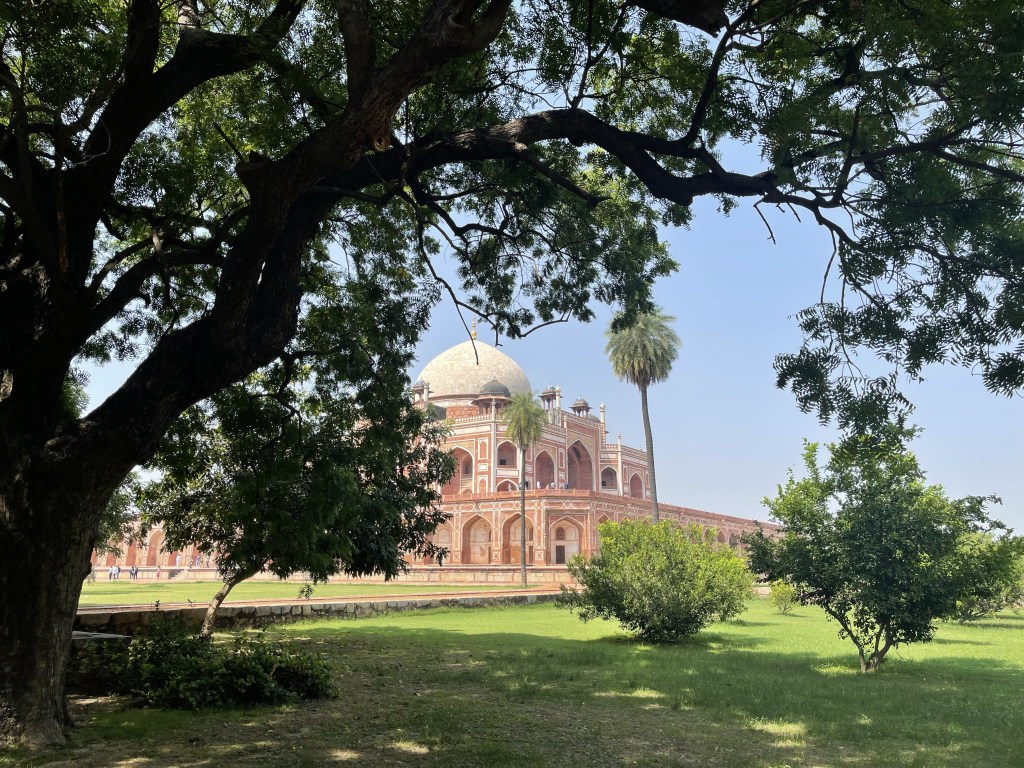
Additionally, the other old faithful spot of Humayun’s Tomb was visited, along with some of the markets of Delhi for an experience of the local retail hustle and bustle.
The most challenging place to visit though was Old Delhi (the new Old Delhi that is, since it became such after the original Lal Kot lost the title). What is now known as Old Delhi was in fact a walled city founded in 1648 called Shahjahanabad. This city remained the capital of India until 1857 when the British Empire took over, and subsequently during their ‘tenure’ developed the new region to the south of Shahjahanabad, which is now ‘New Delhi’.
Old Delhi remains the most abrasive place to visit here in the national capital region (the term used to describe the overall Delhi area). It is hard work, in part due to the sheer volume of people there, the way these people exist, and the ramshackle infrastructure that they must live within. This was my second time here since I moved to India, and we repeated the cycle rickshaw ‘tour’ with a couple of local guys peddling us westerners around the small maze of streets and markets that make up the area. Sitting a few feet above the melee around us, being manually pulled along by a couple of labouring guys in the heat being watched by the sea of eyes all around inspires a sense of fascinated guilt. It is a sight to see, but to do so from this position of oversight invokes an almost uncomfortable pang.
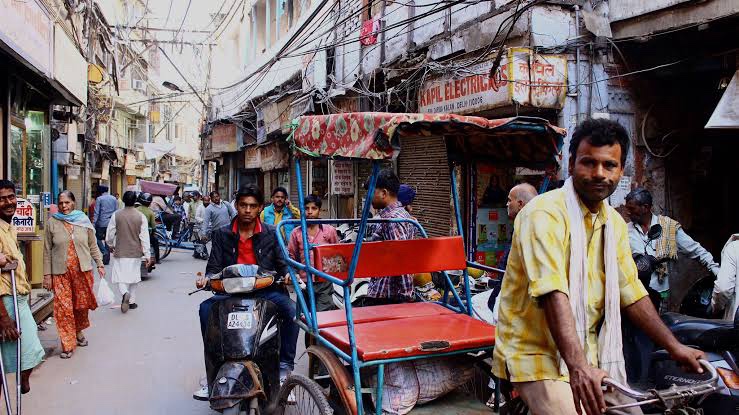
In the few hours we were there, we saw a woman faint and fall to the ground face first into a market stall, apparently from the toxic fumes in the shoe shop she was working. We saw a fight erupt between a few young lads, and we saw an abundance of street children and dogs all carving their way through the bustle.
Visiting India should not just be about the finer things. True India exists in places like Old Delhi, and it needs to be seen to comprehend this incredible country. As hard as it is. Being the white ‘rich people’ (as we were called by someone calling out while there), necessitates a perspective of understanding and sensitivity in visiting. Paying the rickshaw pullers the asking rate, and tipping well makes it a positive for them, and our visit helped put food on their tables. But that does not mean being part of the convoy of western tourists trawling up and down those streets, phones out snapping away at all the harsh sights is ever going to be a comfortable experience.
And in a similar vein, the experience repeated itself on a whole new level just these last few days when we went away for a quick one night / two-day trip. I had taken a couple of days off work for the last few days Jen was here, and as per our practice on each of her previous visits we wanted to see somewhere else in India.
And so, to Varanasi.
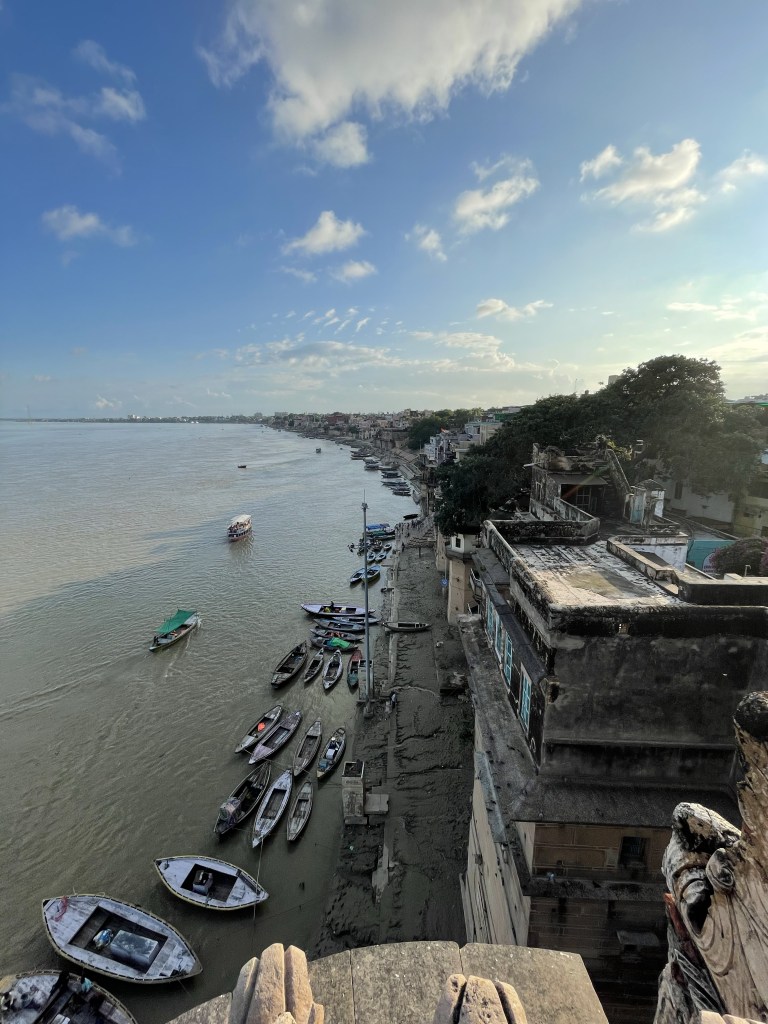
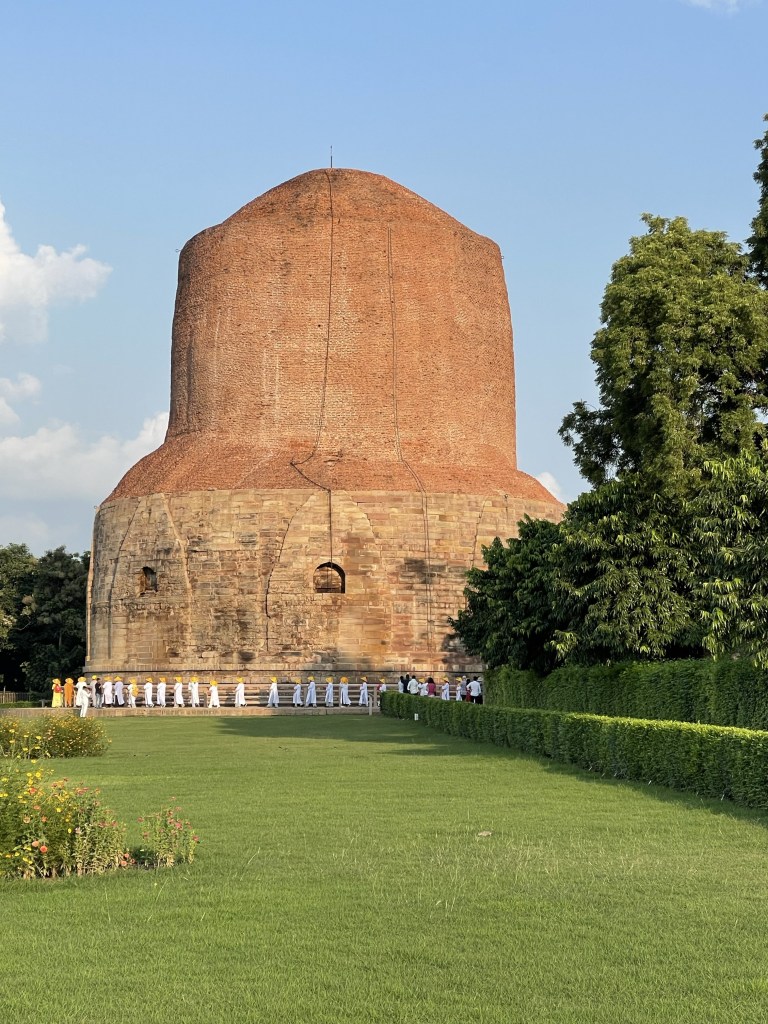
The holy city, on the banks of India’s holy river the Ganges, Varanasi is a place like no other. It is a site of pilgrimage for Hindu’s in the main, but Buddhists also have claim to historical religious relevance. It is the city in which Buddha was said to have given his first teaching after attaining enlightenment at a place called Sarnath on which a large monument now sits to mark the location. While there we witnessed some Buddhist pilgrims circling this monument celebrating as they went.
Varanasi is described as a representation of all of India, with a mix of different religions and castes existing within its boundaries, having deep rooted relevance to each. It is also one of the world’s oldest continually inhabited cities with history dating back thousands of years to an era where it was known as Kashi, the centre of the Kingdom of the same name all those millennia ago.
I confess I was slightly anxious about the trip, as I knew it would be hard to see and experience. I am well used to India by now and as I have said before am very comfortable here. But I expected Varanasi to be in a different league. Guidebooks actually advise new travellers to India to acclimatise to the country in other cities before travelling to Varanasi as the culture shock can be overwhelming if not prepared for it. And I can see why.
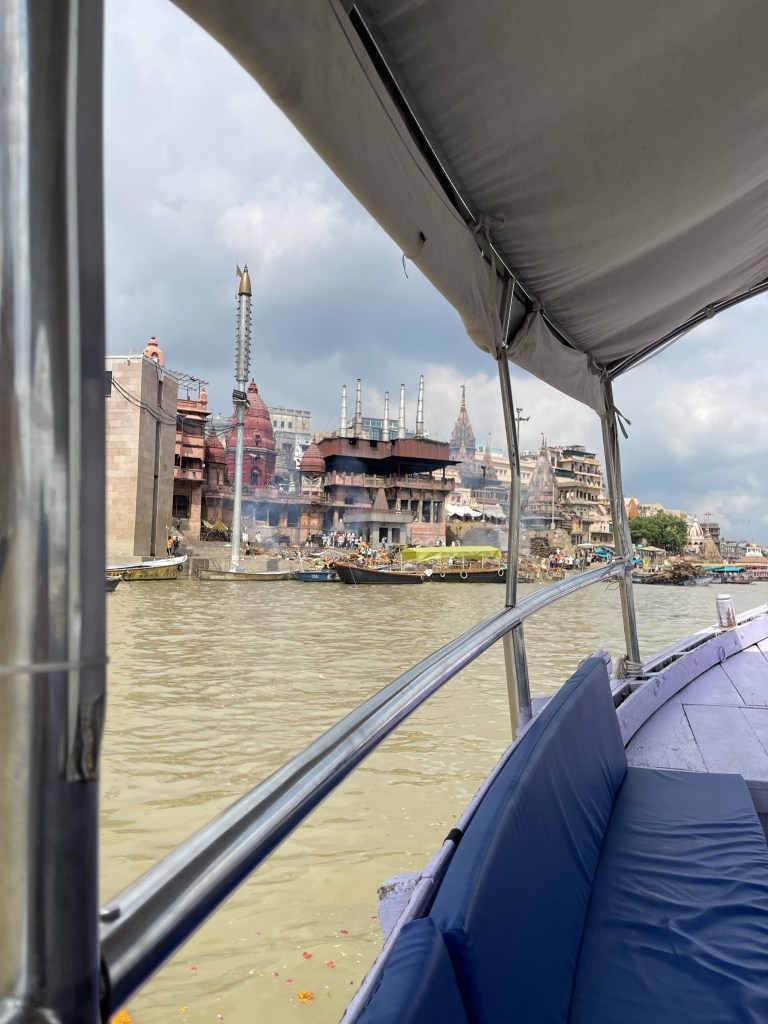
The most famous part of the city is the Ghat’s along the riverside. A Ghat being a place with steps leading down to the water from which people bathe in the holy waters, perform ceremonies and rituals, and in some cases cremate the dead. The cremations being the most renowned use. It is said that if you die in Varanasi, you can be cremated there, and having Ganges water contact during the ritual releases the spirit for ascendance to the heavens. Manikarnika Ghat is the most famous for this, and it is said around 100 cremations occur there each day, with queues of families waiting their turn having carried the bodies through the streets of the city to reach the sacred place.
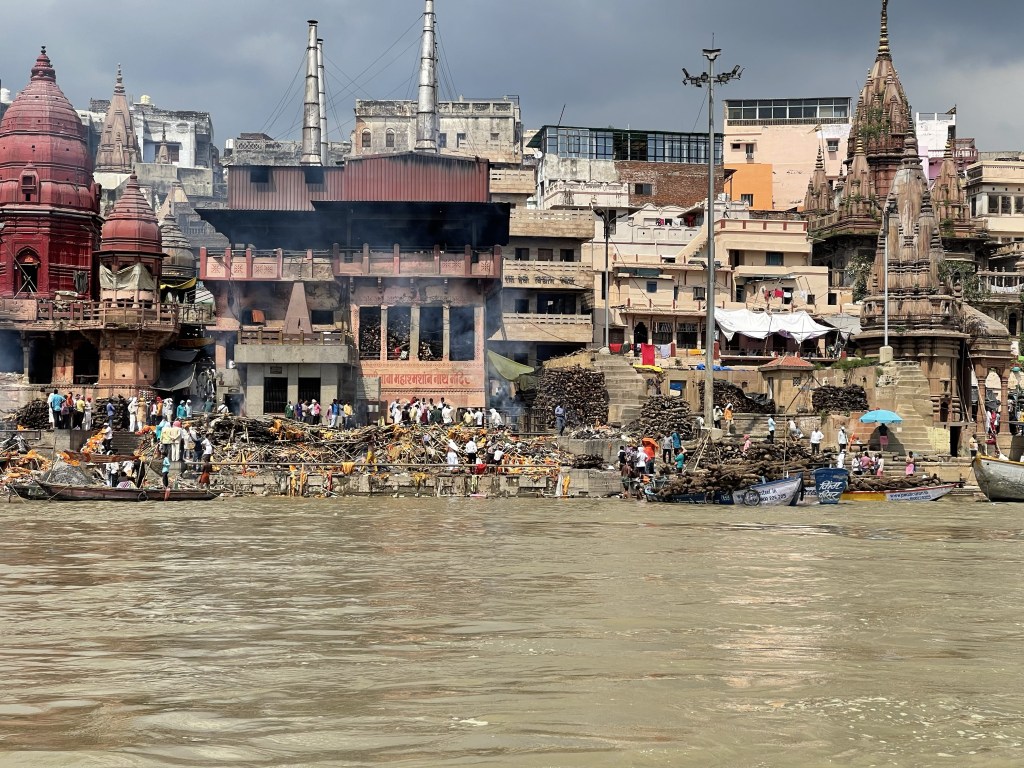
It is not appropriate or welcomed to photograph these cremations close up (if so inclined..), but from a boat further out on the river it was ok to do so. We took such a trip and came in close to shore to witness first-hand the undertakings. Watching a deceased old lady being dipped in the river by her family, then laid atop piles of wood and prepared for the flames to consume her shortly after, is a sight not to be forgotten. It was right to give courteous respect for the families going to such lengths. We stood on our boat only a few meters off the riverbank and watched with quite literally morbid fascination, all the while having the same Old Delhi sensation of voyeurism. However, being calm and watching with respect leaving the camera phones aside was the most appropriate way and did not seem to distract or offend. The most ghoulish sight though was seeing the street dog in the water just offshore gnawing into something. I am glad we could not see what it was trying to eat.
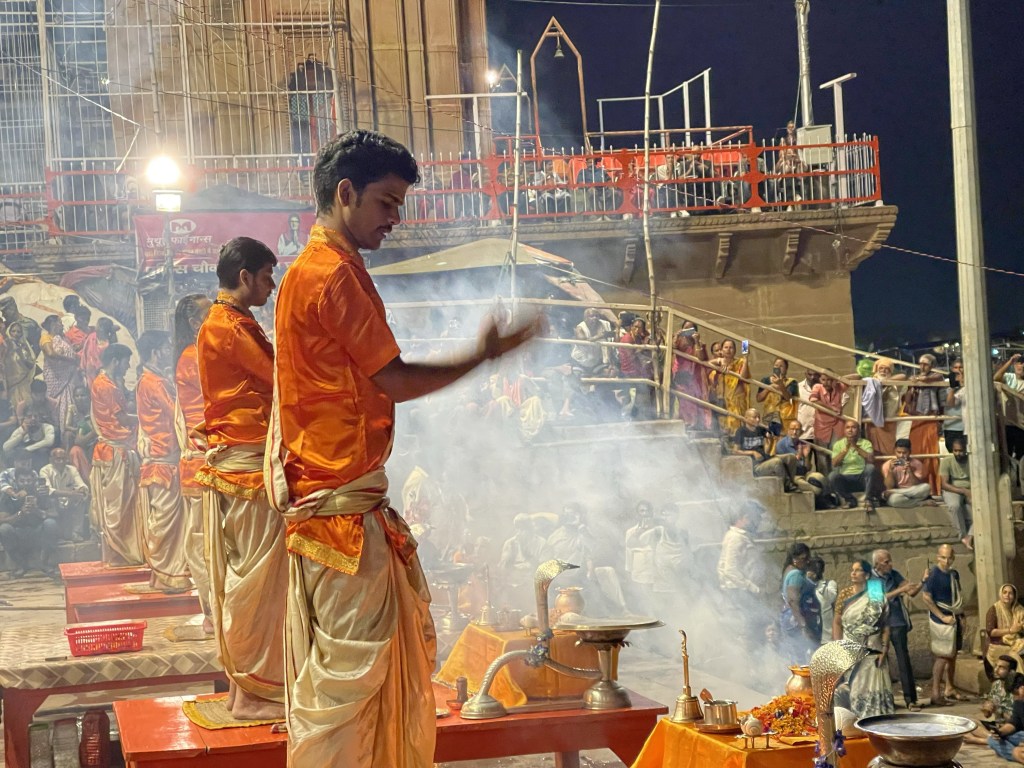
Less challenging was watching the ceremonies at some of the other Ghats which undertook rituals of blessing for the ashes of those previously cremated, rather than cremating them there on the riverbank. We were fortunate to have a prime position at one of these ceremonies held on the Dashashwamedh Ghat – watching five Sadhus performing the Ganga Aarti. A ritual they perform each evening as the sun sets.

Walking around the city the next morning was also an experience akin to the Old Delhi ambience, with narrow walkways and an abundance of people some of whom were persistent in their requests for money, or milk for their babies in some cases. We never felt threatened or at risk, but it is right to have a broader awareness of the environment in which we were exploring and to exercise the appropriate level of respect for the deep-rooted holiness of this city.
Varanasi is a place to see, as hard as it is. We stayed in probably the most prime landmark hotel right on the river bank a mere 100 meters or so from the Dashashwamedh Ghat, with a river view and an assortment of monkeys for company.
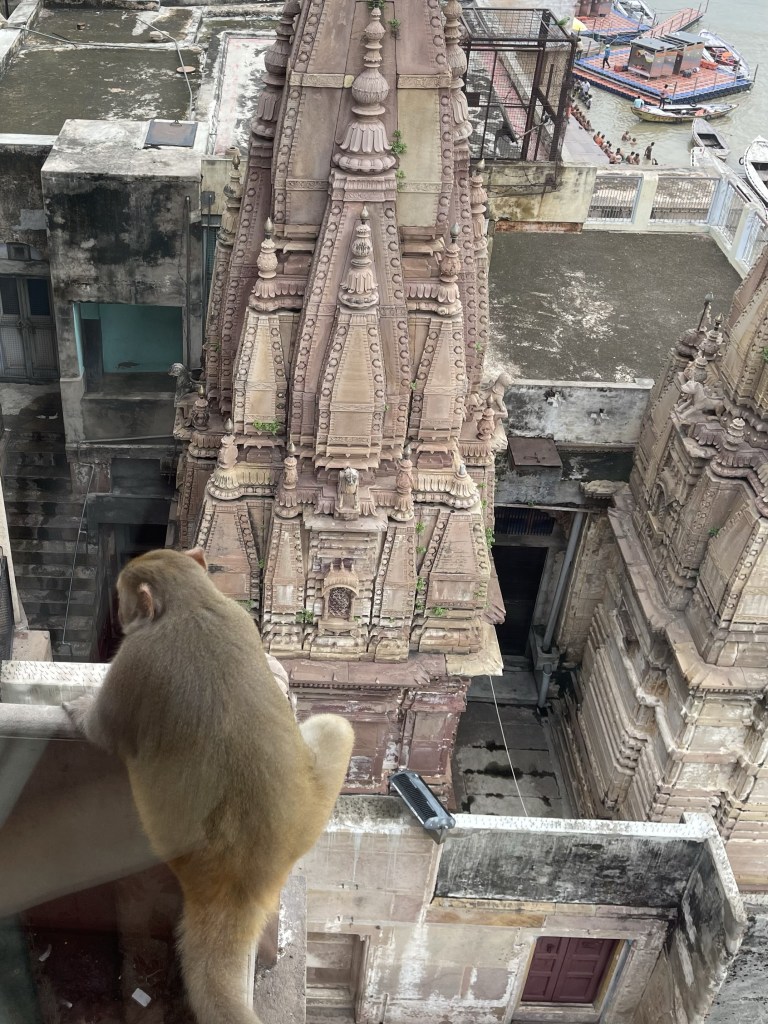
This gave us shelter from the storm so to speak, but again added to that sense of watching it all from a protective bubble.
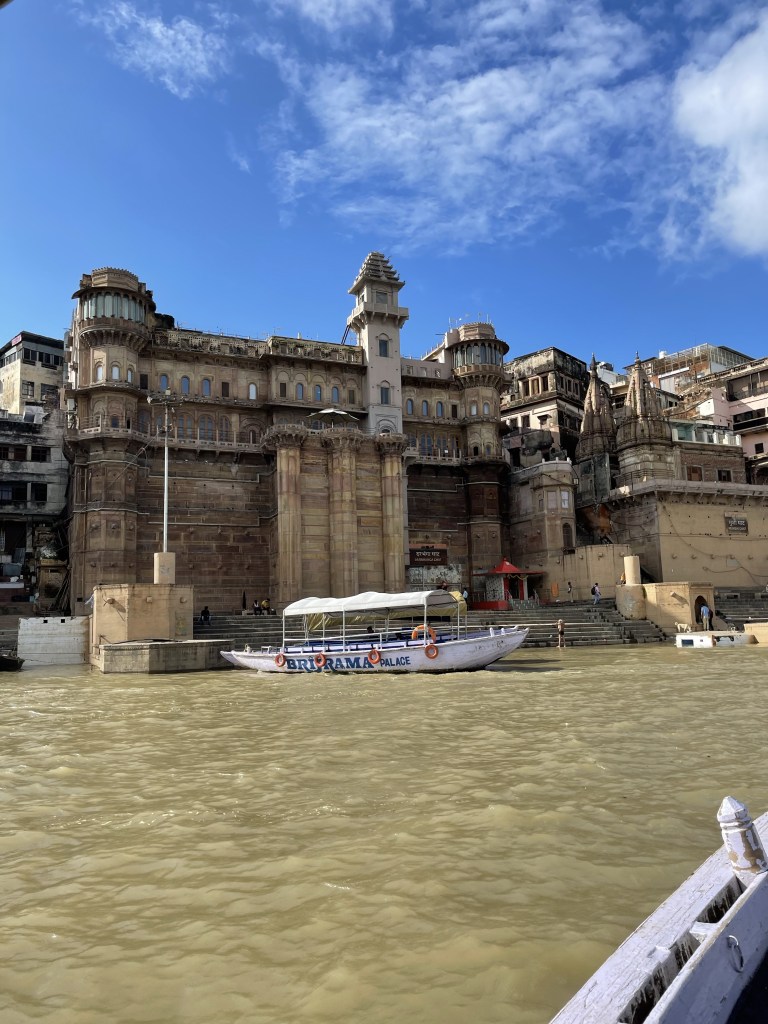
As I have said before India is a proud nation, and is a diverse mix of cultures, religions and huge spectrums of poverty and affluence all in close proximity. By necessity, to experience it as a foreigner requires us to be just that – a foreigner.
Now I have been here long enough I understand it better and know that despite this viewpoint it is also understood by most of those here in India. If we visit this country with the right attitude and provide for our hosts as we benefit from their company, we help to fuel the development of the nation and its people. As hard as it can be at times to feel like a voyeur, provided we visit with respect, courtesy and a mutual openness this can be a positive and rewarding experience for us foreigners and Indians alike.
 JC in India
Leave a comment