“Incredible India”, the marketing campaign went. I remember seeing this on TV, and in cinemas even, displaying the stunning visuals of the landscape that India has to offer, and a sultry voice singing out “India, incredible India” to round off the imagery.

This campaign ran across the globe between 2018 and 2019, having been instigated and funded by the ministry of tourism here. Given its end coincided with the start of the pandemic, it still resonates as the most recent sales pitch the country has made to promote itself as a destination.
We often read the promotional blurb about places to visit, and will be influenced accordingly; ‘serene and tranquil places’, ‘vibrant and awe inspiring sights’, and ‘marvels that will fill our hearts with wonder’. Many of these adjectives have been used to promote India and its attractions.
In reality, India is truly incredible in many ways, with sights and sounds which in certain areas will tick the boxes of all these descriptions. However, there is another reality which sits alongside, and sadly often overshadows and undermines the attempt to promote this country in such a way.
Since coming here in January I have been a “proper tourist” on a couple of occasions now, each coinciding with when Jen has visited; the trip to Agra and the Taj Mahal a few months back, and then this last weekend we went to experience Jaipur – the pink city, capital of the desert state of Rajasthan.
In my early travels here 20 or so years ago, I visited Jaipur. I have little to no recollection of the place if I’m honest, and can only assume that is down to a combination of it being more a transit point en route to the desert – which I do fondly remember – or being largely unremarkable for a backpacker on a budget. My ‘mood’ photo of my early travels in India was taken on the wall of a fort overlooking a Rajasthan city, and until I went to Jaipur this weekend I believed this was where that photo had been taken.

I was actually so keen to recreate it from the exact spot, that I dragged us up to the potential locale – Nahargarh fort – overlooking the city down below. For a while I had us scouting around trying to find where the photo could have been taken, although I could not find the exact spot, and tried instead to get a couple of arty equivalents, in areas I thought likely as candidates.
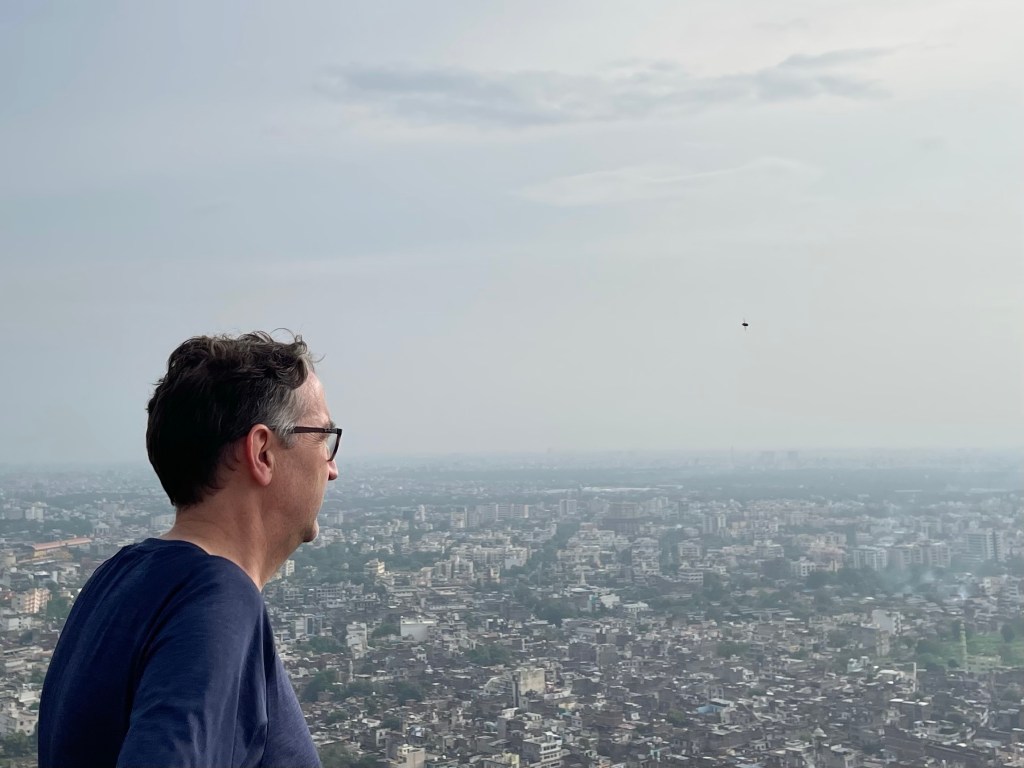
However in retrospect, I believe actually my geography is wrong. The elevation in the two images is not the same, and as much as I want to reconcile the pictures I am sure now that I have got the city wrong. From a bit of google maps detective work I’m pretty sure that original photo was taken in Jodhpur, not Jaipur, which is another 200km further into the real desert of Rajasthan. If/when we get to Jodhpur then another image location hunt will no doubt be instigated!
Jaipur does get all those accolades of descriptive adjectives mentioned earlier; awe inspiring forts and opulent palaces of the Maharajas to quote a few from the guide books. It is true those forts are pretty awe inspiring, and that palace is pretty opulent.
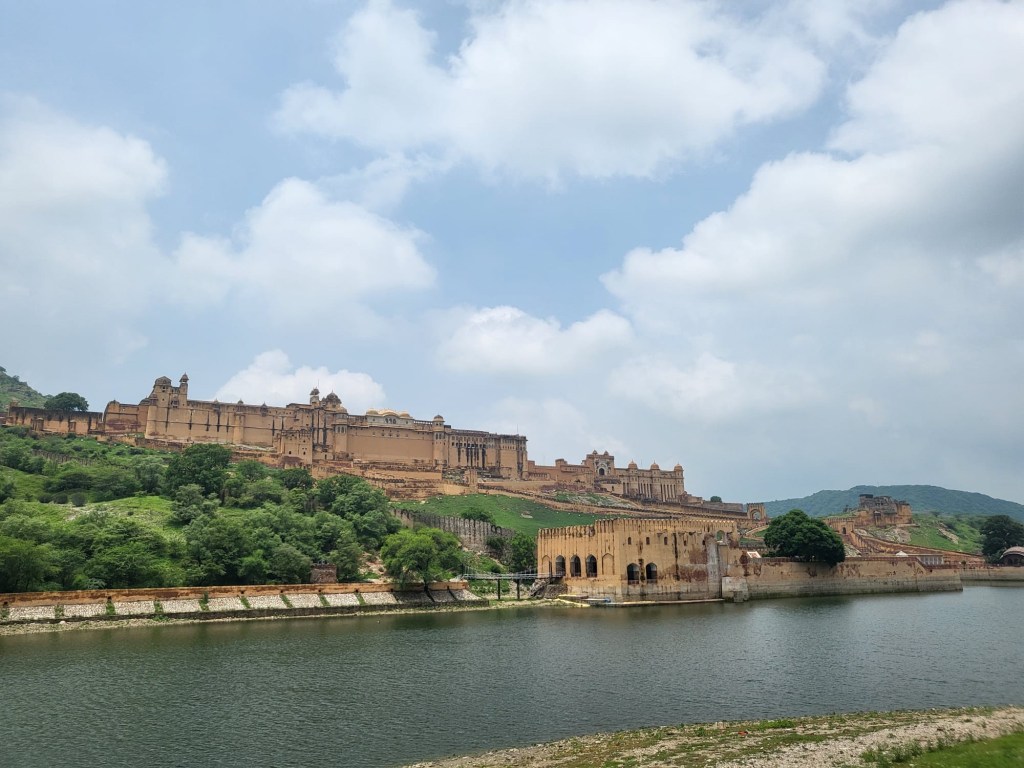
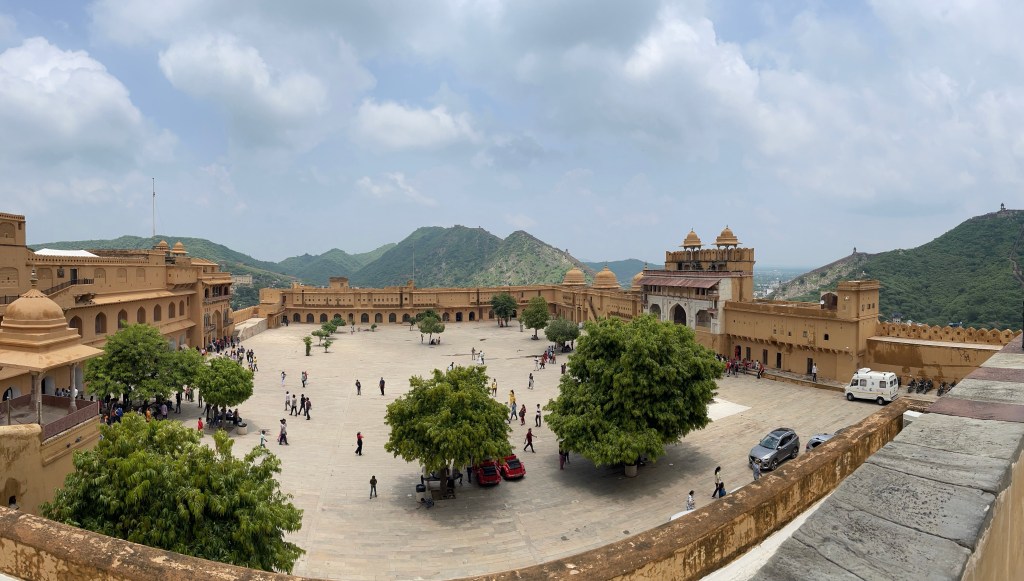
However, what is not described, but is very much witnessed, is the sheer disruption to the intended awe that is actually experienced while visiting.
Escaping from the merchants trying to sell their wares almost requires physical force while fleeing from pursuit. In the Amber Fort there seemed to be a thing for selling sparkle coloured pens, and only on climbing into the car could you escape, albeit still with hands and faces pressed to the window shouting ever reducing prices for stuff you really don’t need, or more specifically didn’t go to an ancient fort with an intent to buy.
The crowds are one thing – India is a busy place, and tourist sites such as those in Jaipur are going to be busy, particularly at the weekend – but it’s the style of busy that creates more of the challenge. As a white man, I will get the stares and the curious looks, but for a white woman the staring of some of the younger lads goes to a whole new level, verging on intimidating at times. This is far more prevalent away from Delhi it seems (where exposure to foreigners is more the norm).
Jen got the full brunt of this on many an occasion, coupled with the subtle (and sometimes not so subtle) taking of photographs and requests for selfies. Our first experience of this was a few months back at the Lotus Temple in Delhi and was actually more relaxed and good humoured, as it was more family orientated in the main. Jaipur though somehow presented itself differently, with groups of lads hanging out and being, well, laddish.
I suspect an element of this goes to the core culture here where lads hang out with lads, and girls hang out with girls, and often never the twain shall truly meet. At least until wedding days, or on the occasional occurrence of a marriage for love. Our driver, Pawan, at one point described this as he told us about how he had married for love to his childhood sweetheart. To him it was perfectly normal to describe matrimony in India as either of the ‘love kind’, or the ‘parents arranged kind’. The dating scene we would have been used to in the west is seemingly not the norm over here. Which only serves to exacerbate the lads / girls / staring culture due to the sheer unfamiliarity and the lack of intuition at a younger age of how to deal with the opposite sex. Hence the circumstance of often awkward, but sometimes bullish interaction arises. I should be clear it is not threatening in a dangerous way, it is just intrusive and can be uncomfortable at times.
Then there is the heat. Actually last weekend was relatively cool being low 30’s Celsius, although with a high level of humidity due to the start of the monsoon season. In fact the drive to Jaipur – about 250km south west of Delhi – should normally take about 4.5 hours or so, but the intensity of the rain caused the road to often be flooded and difficult to pass which meant it took around 6 hours overall.
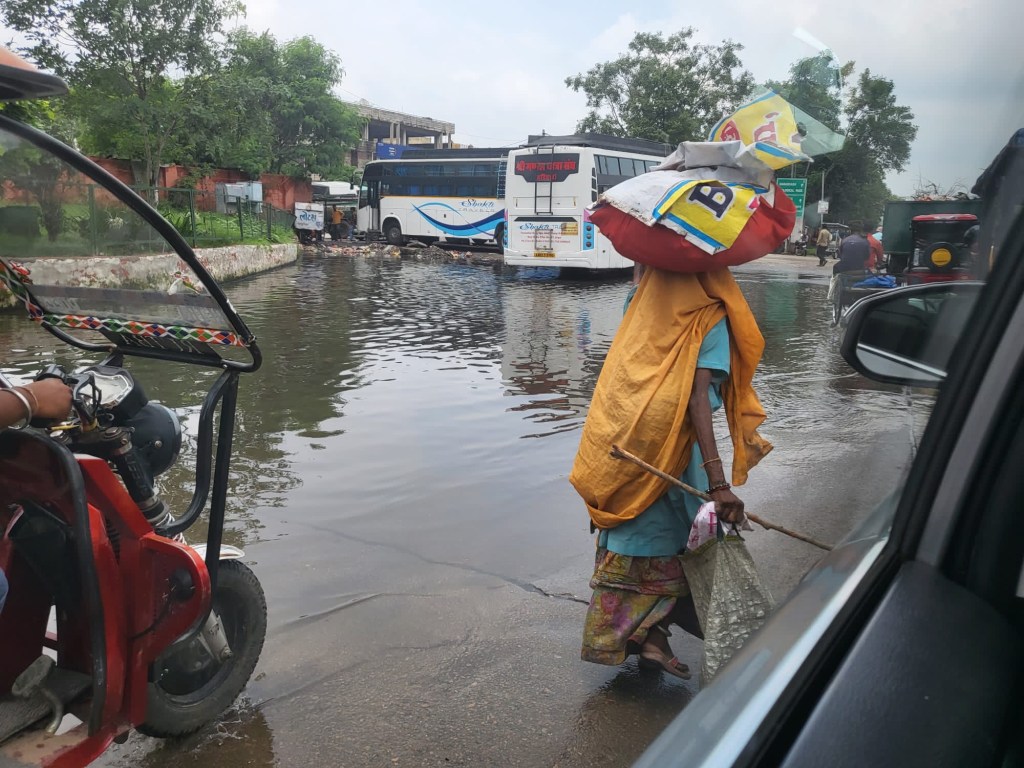
It also took more time due to the roads playing host to a current Hindu festival at the moment, where pilgrims walk for many miles carrying pots of Ganges river water over their shoulders, often sandaled or bare footed. It is known as the Kanwar Yatra. When I say many miles, these pilgrims were walking up to 1,000km in some extreme instances so no simple feat!
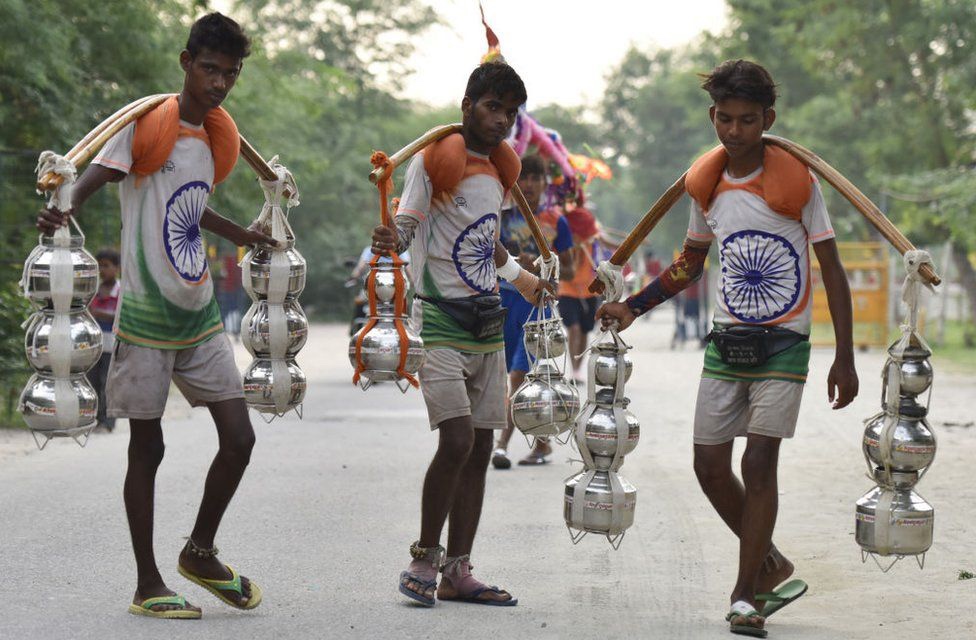
To quote a BBC article about it:
“Every year, northern India is flooded with men and women in saffron clothes walking through the streets carrying pots suspended on a stick. These are the Kanwariyas, Hindu devotees who embark on an annual pilgrimage to collect water from the river Ganges, which they believe to be sacred. The legend says that the Hindu god Shiva once gulped down poison causing him to turn blue. He was cured when he drank holy water from the Ganges. So Kanwariyas honour him by transporting water from the Ganges to various temples dedicated to Shiva .They believe that the sacred water will dispel negative energy and endear them to Shiva.”
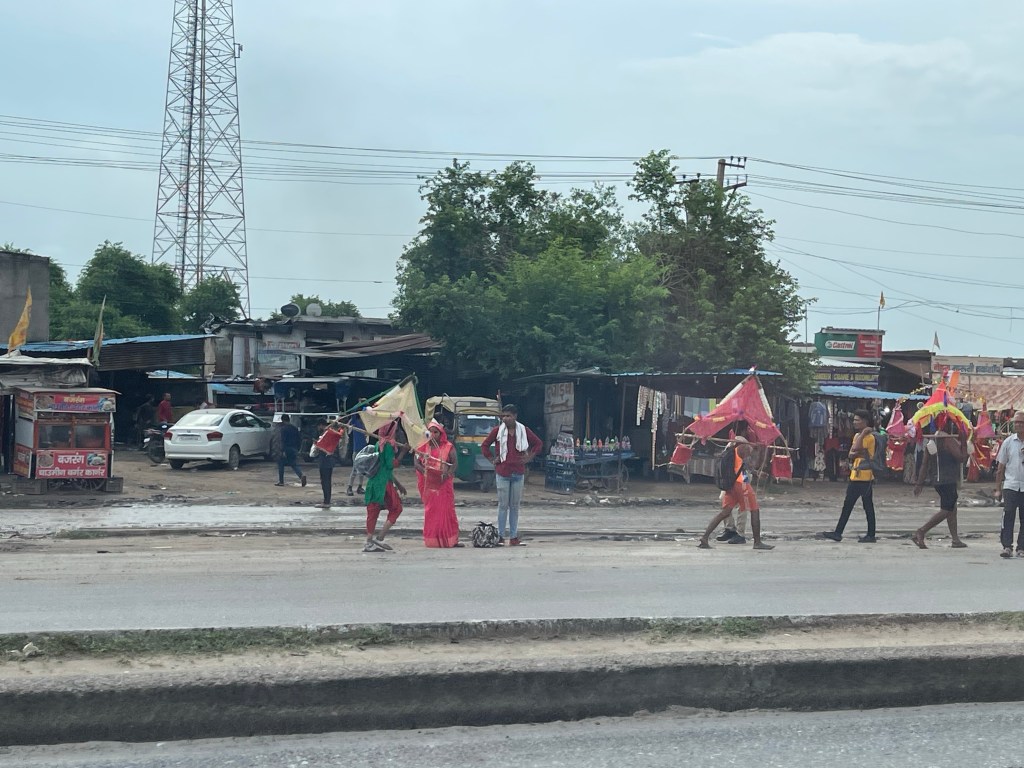
These pilgrims walk along the roadside going from support tent to support tent where they refresh themselves amidst music and carnival. There are also trucks carrying festival revellers standing on their vehicle tops while driving slowly down the road blasting out music, the riders dancing merrily without a care for any traffic carnage caused in their wake.
Overall, with the monsoon rains, pilgrims, and dancers on trucks, along with the sheer state of disrepair that some of these highways possess, does not make for a quick journey at times!
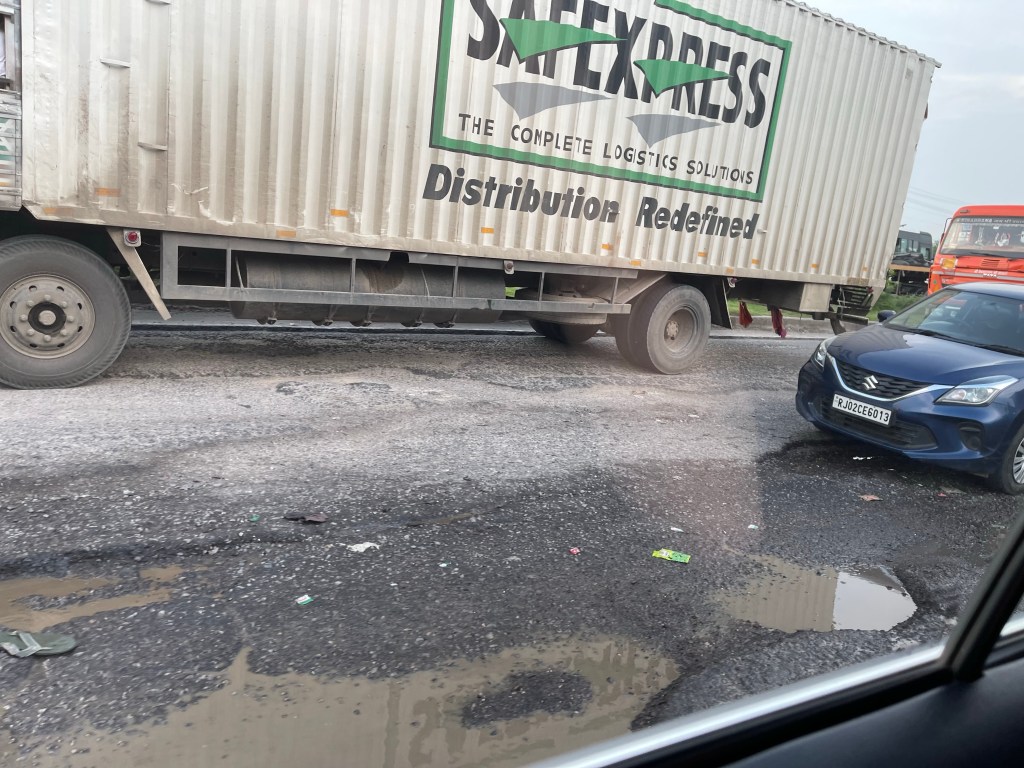
Despite this though it is fascinating to drive across the country. The flight from Delhi to Jaipur is less than an hour in the air, but by the time you have factored in all the airport formalities and transit times at both ends etc. it is not that much quicker from house to hotel to fly. So for this trip it was a conscious decision to go by road and see the sights.
And sights we saw… aside from the pilgrims, and associated obstacles, it quickly becomes the norm to ignore the plethora of cows and oxen which meander these roads.
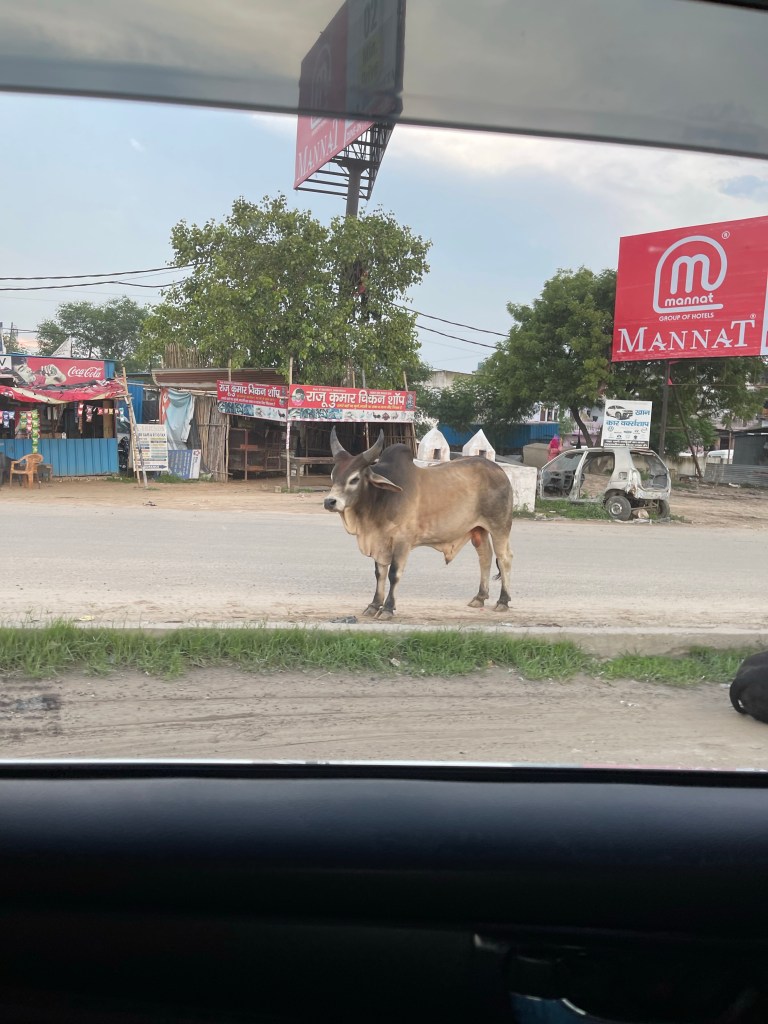
Or indeed the monkeys clamouring over themselves to eat fruits around stalls in certain sidings, along with the occasional camel, or elephant.


There is also the regular occurrence of people just wandering across the road seemingly without a care despite the onslaught of traffic thundering down upon them. Plus the ever growing “tinkle tally” to witness – a phrase I’ve adopted to count how many men we see at the side of the road relieving themselves. It was not long before we were into double figures on that one and started to lose interest in keeping count!
India has a network of highways that link major cities, and the one connecting Jaipur to Delhi is the NH48 (National Highway 48). Carrying on south from Jaipur you’ll end up in Mumbai if you go far enough, but despite assertions from Pawan that this is possible, it’s not a road trip I ever plan to take. I actually write this now 35,000 feet above that road somewhere between Delhi and Goa, and believe me this way is a much quicker and more comfortable way to get around India, and thankfully any tinkle tallying is done behind a closed door!
These highways are well travelled to say the least, and it seemed the road to Jaipur was extremely popular with trucks bearing whatever goods they were burdened with.
I love the Indian trucks. Often ramshackle and overloaded they trundle along with little care for other road users, their horns regularly blasting out sound in the form of short bars of music which are synonymous with India. I wish I could replicate that noise in script. I would love to acquire one of those horns and install it in my car back home in the U.K. when I do return. It would cause quite a stir! Particularly if we managed to acquire a rickshaw and bring one of those back for a local run around too. There is a kernel in the imagination there, so will have to see if that is in any way possible in a few years time…
In conjunction with all this comes the heat, the smells and the sheer grime at times also. The air conditioning in our driven car provides escape for those of us fortunate enough, but the majority of the trucks and some of the local cars don’t have such and their occupants have to cope. Often in unusual ways.

Travel in India by road is therefore an experience, and a challenge in equal measures. I can describe it all day long, and share photographs until that proverbial cow crossing the road getting in everyone’s way does come home, but it truly has to be experienced to really be appreciated.
The filth and grime is not possible to ignore either. It is sad to describe a country as incredible as ‘Incredible India’ as being filthy, but reality is reality and that cannot be hidden despite the promotional adjectives. Jaipur was horrible in this regard in a lot of places. Discarded litter and general waste forming large mounds all along the edges of many roads, which when combined with the mud and water resulting from the monsoon just made it toxic in sight and sense with the smells being pungent in the hot humidity.

But… that’s the downside. That is the reality.
Despite this though, the other reality of Jaipur is in truth that of awe inspiring hill top forts, built centuries ago. It is of palaces made for Maharajas with ornate and spectacular decoration. It is of strange observatories made of weird and wonderful shapes for the Indians of centuries ago to understand time and the universe.
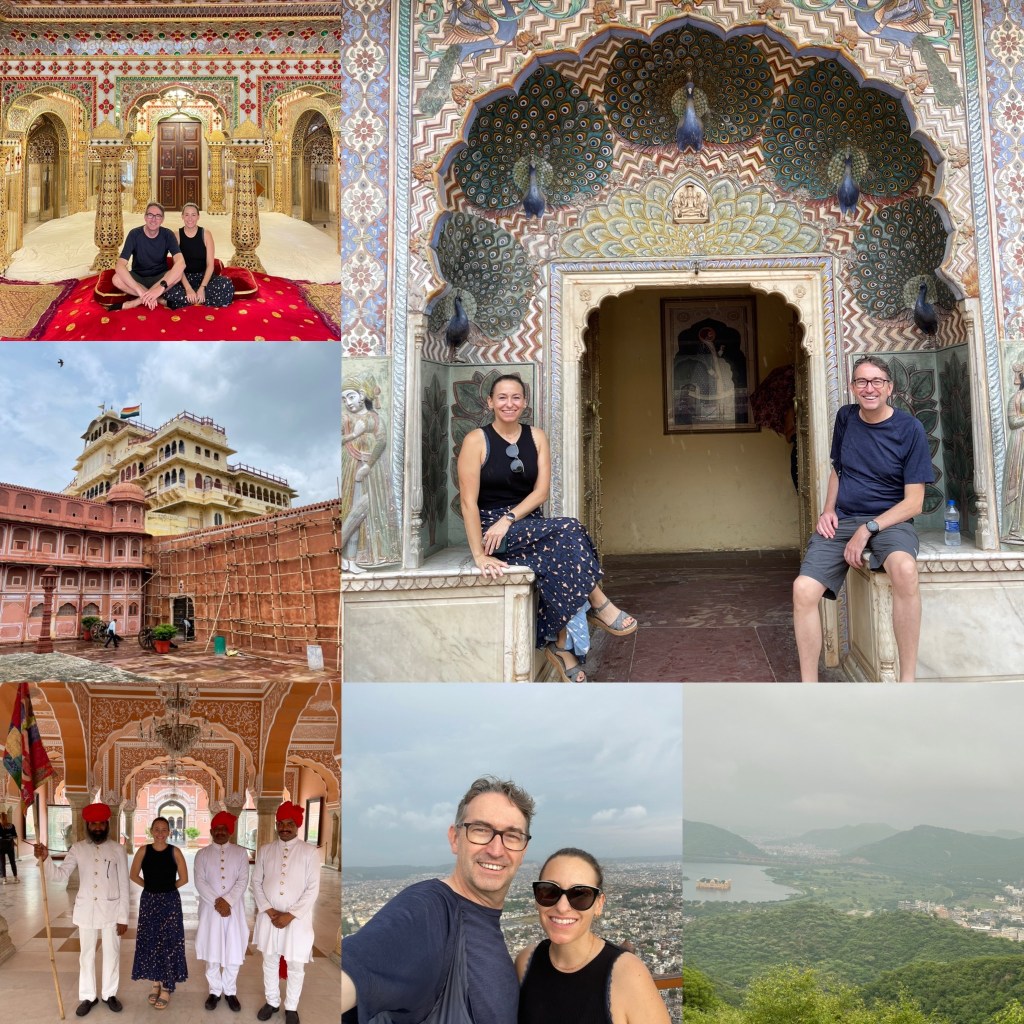
It is also of a people who strive to just exist in this harsh environment. A people who have learnt to adapt and survive in a manner that protects them in such a populous and competitive world. Their curiosity underlies the reason they stare. Their cultural upbringing gives them the inclination to be intrusive at times.
It is different to what we are used to, and it is hard to deal with at times. But it is what it is, and understanding the reason helps understand how to cope.
But by visiting, by paying for service, by buying local goods, we are providing our way and helping to turn the economic wheels upon which this country and its people rely.
You have to see it to believe it. The reality, however harsh, is definitely worth it.


 JC in India
Leave a reply to flanhe Cancel reply