It is probably fair to say that most readers of this would not naturally consider India as a place to go for high quality health care. But that would in fact be a misplaced perception. Healthcare in India is actually up there with the best of them, and a combination of factors have placed India as one of the world leaders in terms of medical tourism.

When I first came here, I was also under this false impression. Part of my pre travel activity involved getting all the relevant vaccinations – which of course was required, as these are preventative medicine not treatment and so still necessary and the right thing to do. However, I also subscribed to an extensive (and expensive) ‘expat’ medical insurance policy. Researching such potential policies opened the door to some pushy sales tactics and I remember having a long call with a ‘sales representative’ for a market leading provider of such health insurance who was based out of Dubai and was focused on potential clients such as me, desiring protection against all the evils of a foreign land. It turns out policies like this are not cheap and I ended up subscribing to the most basic of policies which would cover me for all the relevant potential issues for a grand sum of around £200 a month! I figured it would be sensible to invest in a comprehensive policy ‘just in case’ and it would just be a necessary expense as part of this journey.
My company also provides medical insurance, but the total sum insured is for around £10k a year in treatment and I just thought at the time that would be way too low.
I always had it in mind that I needed to have a comprehensive policy in case of a major situation, and a need to potentially repatriate to the UK and any other such requirements. I know of an individual who moved to India years back to work for the airport in a similar role (although admittedly a different time / people involved), who sadly broke his leg in a car accident while here. From what I heard it caused him major issues and I believe the after effects still impact him. Stories such as this made me think I just needed to be well protected, and that surely just £10k coverage would not cut it.
As I got more established though, and the £200 a month kept coming out of my account (much to my chagrin), I realised that in fact this was likely overkill. The cost of healthcare is materially lower than in the ‘west’. I have seen commentary that like for like treatment here is 10% of the costs incurred in the UK/Europe. So, after 3 or so months of shelling out this exorbitant insurance sum, I cancelled the policy. That in itself took some doing, as needless to say you had to speak to someone on the phone. While the right to cancel existed, the pressure not to do so and the scaremongering tactics deployed to try to retain the business were pretty aggressive. But I persisted and rid myself of the protection (and cost) of the policy and went it alone with just the company policy to rely on. At the time my ‘insurance’ perspective was a combination of this company scheme, which would suffice in the event of an accident, and a flight home in the event of a material illness. To some extent this remains part of my mindset, as if I am unfortunate to diagnose with anything long term and debilitating in nature then yes, a return to the UK would be my way of dealing with it. But I now have a different opinion on health care here in India which leads me to believe my initial views were incorrect.
For a start I know that my company are very supportive of their senior team, and in the event I had a major issue the amount listed in the policy cover would be pretty much overlooked and the company would do what it needed to ensure I was ok. They are good like that. Fair play to them, they do seem to care for the health and wellbeing of their management, and I trust that if I were in ‘trouble’ I would be well looked after. So that gives me peace of mind, and when considering the relative low cost of medical treatment here it reassures me that cancelling my expensive expat medical insurance was definitely the right thing to do.
Secondly, I am now more cognisant of the fact that health care here is of a much higher standard than I first believed. Despite the country’s shortcomings in some areas, it does have a lot of strengths in certain fields, IT being probably most well associated with India. Medical capabilities are another.
The underlying health challenges present in the country tend towards a population that are well versed in having annual health checks. Preventative monitoring seems well established here. Before I joined the company, I was asked to do a comprehensive health check and provide a detailed report against a defined set of testing criteria. The challenge I had though was this was communicated to me around the middle of December, when I was due to start here at the beginning of January. Trying to get an appointment for such tests over the Christmas period in the UK, during the pandemic, was just not feasible. So it was accepted by the company that I would just have to arrange such tests in India after I arrived and once the pandemic restrictions allowed.
As time passed, I forgot to arrange this and nobody chased me, so while it was at the back of my mind to do I also knew I was generally fit and well, so to me it was not a priority. A month or so ago though, the HR guy called me asking if I had managed to have the tests as an audit was being conducted and they needed to show some form of medical documentation for me. He could not comprehend the fact that I had no such recent medical examinations. My protestations that I had not needed to go to a doctor for years was almost unbelievable to him, although ultimately he had to accept that no such medical report existed. I also still surprise him that I do not know my blood type. It is supposed to be printed on our security passes for any emergencies, but I simply do not know it, and to this day that section remains blank. “Red” apparently was not detailed enough…
However, I promised him that I would finally get a test done (“sorry, I kept forgetting…”), and this week I have done just that. Every few months we receive offers via the company for ‘annual health checks’ with various competing companies. These companies are ultimately brokers for different clinics and hospitals that offer this as a service. You can book a whole range of different medical checks through them and select a convenient location to go to get them done. Once such broker, MediBuddy, seemed as good as any so I completed the online form and paid the fee of 3,000 rupees (about £30) for a general annual health check for a man of my esteemed age. As you can see, not expensive at all for what was included in UK terms.

The clinic was at a particularly convenient location for me, being literally a 10 minute walk from my apartment in a non-descript building which from the outside does not seem like it is a medical facility.
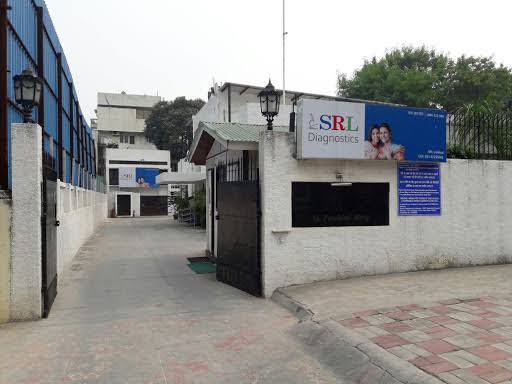
I had an 8am arrival slot, and the appointment confirmation said it would take around 4 hours for the check-up. The first 10 minutes entailed the usual handwritten form filling which the receptionist then duly entered into his system. The fact that the questions were all exactly what I had completed in the online booking portal seemed irrelevant and so my online answers obviously were not integrated into the clinics system. A duplication of handwriting and then extra data entry was therefore necessary. That was probably the most ‘Indian’ part of the experience as following this I could have been at a clinic anywhere in the developed world.
The tests were thorough and conducted with the expected full medical professionalism. The only give away that I was in India was the building itself which probably would not have passed a full hygiene assessment but considering the tests were all non-invasive (except for the blood tests), it hardly mattered. My chest was X-rayed, my heart was subjected to an ECG, I had to walk faster and faster on a treadmill while wired up to various monitors, and my stomach and associated internal organs subjected to a full ultrasound. I had to give 4 vials of blood at the start (in a fasted state), and then after being provided breakfast (cue the toasted veg sandwich), I then had to wait two hours (should have taken a book) for a follow up non-fasted blood test.
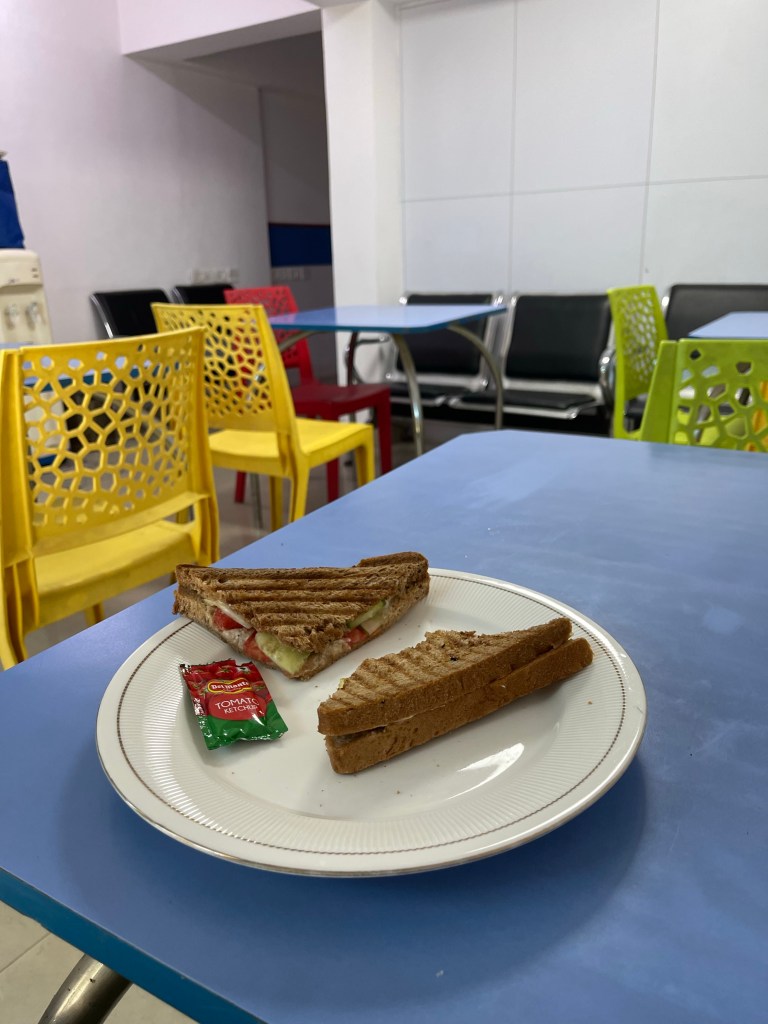
The first blood test took a while and the subsequent bruising I now have from the injection site is not pretty, but I cannot attribute that to ‘India’ as I have had similar in the UK before. I just have hard to find veins it seems!

Once complete I was duly waved off with the advice that a report would be emailed within 24 hours, and true to their word at 9am the following morning a 14-page document came through with all the associated measurements and comments. Thankfully the report says I am still alive, so that is a relief.

The one thing lacking was the opportunity to have a follow up with a doctor to discuss the results as there are a few questions I would have about some measurements. But given there is nothing of any material issue showing it is not particularly important. I am glad to have had it done as it provides peace of mind in some regards.
A colleague of mine in Medan had a routine stomach ultrasound as part of another check late last year and in this they discovered a tumour in his Kidney, which he would not have known about otherwise. He is British too, and the nature of the surgery he required was complicated so other than a specialist hospital in Jakarta he did not have many options in Indonesia. So, he came to India and had the procedure done here. Seeing him and speaking to him a few weeks back he was highly complimentary of the medical services provided and would recommend India for such treatment to anyone who needed it. Hearing his tale was also part of my decision to get the health check done. It had been a while since I had seen a doctor, and given the ease of access, low cost, and seeming high quality of medical services here it would have been foolish not to. I had cancer in my early twenties, and so I know only too well the importance of early diagnosis and being proactive in health monitoring. Had I not acted quickly all those years ago I would likely not be here now, so given the prevalence of quality health care here it is something I would recommend to anyone living here to do.
Now I understand more why India is referred to as one of the leading medical tourism destinations in the world. Apparently in 2022 around 2 million patients visited India for the sole purpose of medical treatment, bringing a quoted $6 billion to the Indian economy. This is forecasted to double by 2026, as part of the Governments Heal in India initiative, where they are actively promoting the sector.
There are certain cities which are most associated with such – Chennai being quoted as the main centre for medical tourism. It is reported that only 50% of hospital capacity in the city is used by the local population with the rest being taken by medical tourists from other nearby nations. Hyderabad, where we operate the airport, is also one city known for this. Last year a new route was launched from Dhaka, Bangladesh to Hyderabad with the underlying reason for the route being to cater for medical tourism demand. The team in Hyderabad regularly engage with the hospitals there as part of their pitches to airlines for route development, promoting the demand for such inbound patient access as a core driver in a route’s passenger potential.
Having seen first-hand the medical capabilities here and learnt more about the system I can understand why now. The country is advanced in certain technological ways, and has a highly qualified medical professional population, a reasonable number of which will have worked overseas as part of their backgrounds. The doctor who did my ultrasound was telling me he had spent his early career at a hospital in Newcastle. Additionally, the prevalence of English language use in such hospitals and clinics makes medical tourism easy as it can be the common language for many diverse nations if required. This means someone coming from Indonesia for example does not need to speak Hindi to get treatment.
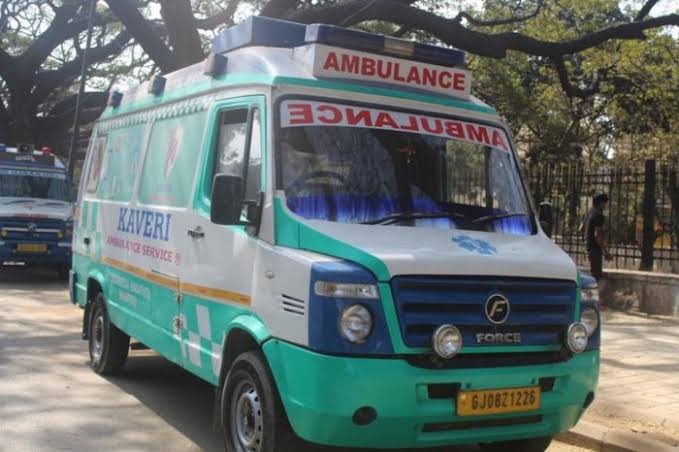
So now I am very confident that cancelling that expensive policy last year was the right thing to do. With a blend of company medical insurance, the low cost of treatment, and the high quality and capability of such here, I feel relatively relaxed now that I would be well looked after if I needed any treatment. That said, I am still slightly unsure how an emergency would play out. There is not the same ‘999’ style service here. Yes, there are ambulances but the mechanism to get one is more convoluted and I expect my first point of call in an emergency would be one of my colleagues and taking support of the company. There is plenty of help available and the people here would do anything to help if I was truly in trouble.
Behind the scenes of this nation, away from the high-profile poverty and the associated perceptions of hardship, exists an infrastructure that is truly developing. Some areas faster than others, and it will be some time before it is truly ‘developed’, but the country has come a long way in recent years. Something I personally have witnessed since my early travels here twenty or so years back. There is doubtless still a way to go with some aspects of medical care also, but in this field the country is on a par with many more developed nations. I for one would have no hesitation getting treatment here if I needed to. I just hope that does not become necessary though of course!
But at least now I have a 14-page medical report in my files at last. £30 well spent.


 JC in India
Leave a reply to babsliz Cancel reply